

Outcome Based Education (OBE)
Outcome Based Education (OBE)
Uttaranchal University has initiated an Outcome Based Education (OBE) System and ensures attainment of the Program Outcome. The Course Outcomes are mapped with concerned POs and PSOs. The assessment of the student is done to ensure that outcomes are achieved through the competencies attained by the students in terms of knowledge and skills.
The University has adopted the CBCS/Electives at the undergraduate, postgraduate and doctoral levels to be responsive to the contemporary student needs, which has enabled academic versatility for learners. The University at UG and PG Level has initiated Outcome-Based Education (OBE) i.e. Program Education Objectives (PEOs), Program Outcomes (POs) and Program Specific Outcomes (PSOs).
The courses at UG and PG level have well-defined objectives, Course outcomes and their CO-PO articulation mapping matrix are stated. This is in response to defined needs, allowing greater academic versatility and improved employability, entrepreneurship and skills of students.
Reasonable justifications (Key Elements of each POs) at departmental and faculty level have helped mapping at course level to further ascertain curriculum- specific findings culminating to PSOs with regard to the course outcomes.
Key Components of OBE
PEOs (Program Education Objectives)
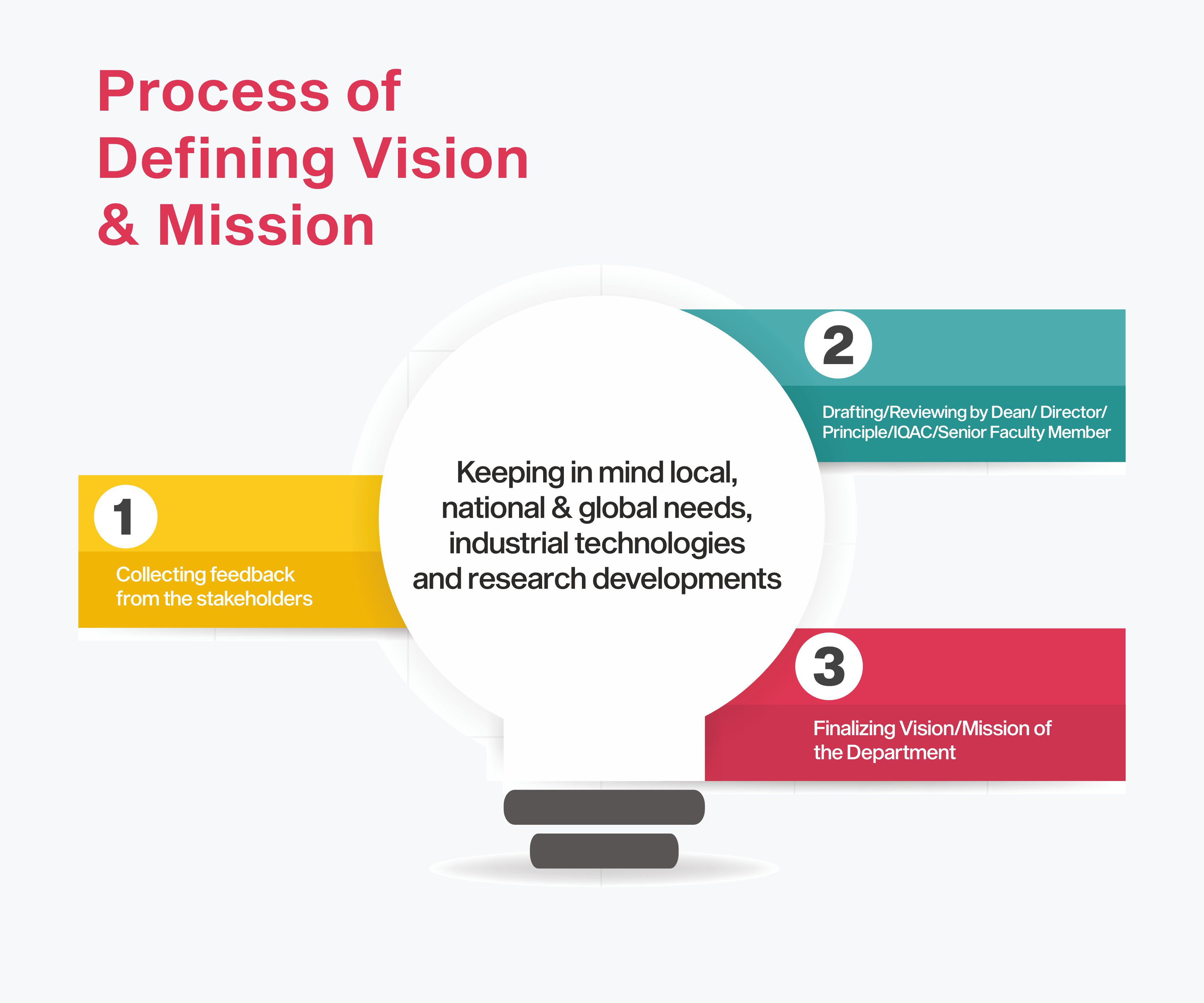
They are the broad statements describing the accomplishments that the graduates are supposed to achieve at the completion of Program. In accordance with OBE, the Program's PEOs are designed in line with the Department's Vision and Mission.
POs (Program Outcomes)
They describe what students would learn through the curriculum relating to knowledge, skills, ethics, behaviour and analysis during the progress of Program.
PSOs (Program Specific Outcomes)
They describe the specific needs that the graduates are supposed to expedite in specific domain.
COs (Course Outcomes)
They describe the outcome on successful completion of a particular course.
All of the Programs are formulated with PEOs, POs/PSOs and COs. The curriculum for all the Programs is developed through a structured and well-defined process which involves participation of faculty, students, alumni and industry. Blooms Taxonomy is followed to define POs/PSOs/and COs of the Programs and Courses.
Communication of OBE
Digital Communication
- PEOs, POs/PSOs and COs are published on University Website
- Published on Faculty and University Student’s Web Portal
Print Communication
- Syllabus of Programs are well designed with the PEOs, POs/PSOs and COs including articulated matrix
- Course file of each Semester lists the COs
- Each Lab manual contains POs/PSOs and its COs
- POs/PSOs are displayed in the Departments
Verbal Communication
- The Dean(s) explain the importance of POs and PSOs along with the evaluation pattern for course outcomes to all the students during the Orientation Program
- Discussion with the faculty and Heads
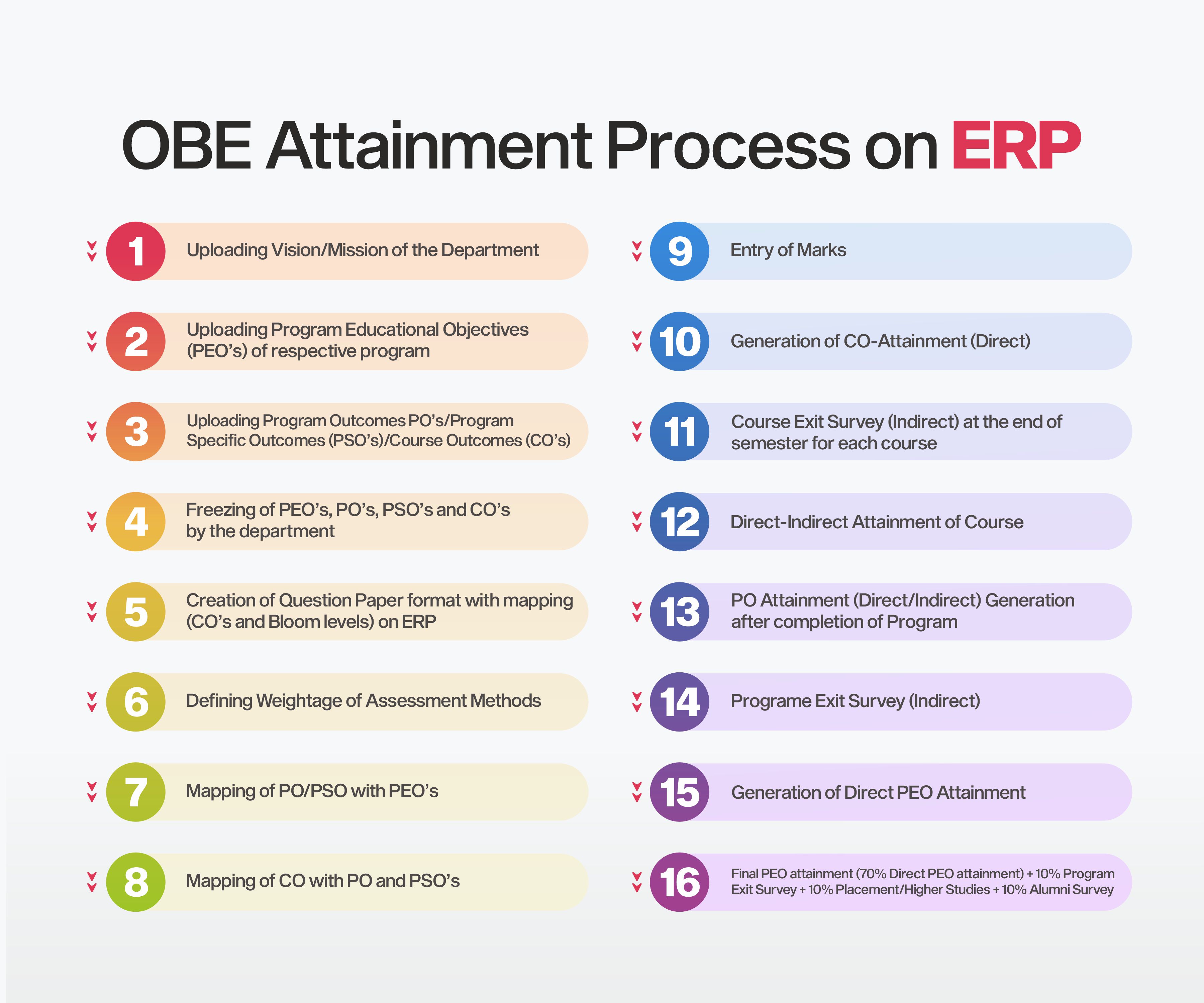
PEO, PO, PSO, and COs of Programs
Bifurcation of PEO, PO, PSO, and CO as per program curriculum